Massachusetts Paycheck Calculator
Estimate your net take-home pay in the Bay State. This tool computes federal income tax, FICA, pre-tax deductions, the flat 5.0% state tax, FICA state deductions, and Paid Family and Medical Leave contributions.
Estimated Take-Home Pay
per bi-weekly pay period
Detailed Deductions Breakdown
What stays in your wallet after Massachusetts takes its share
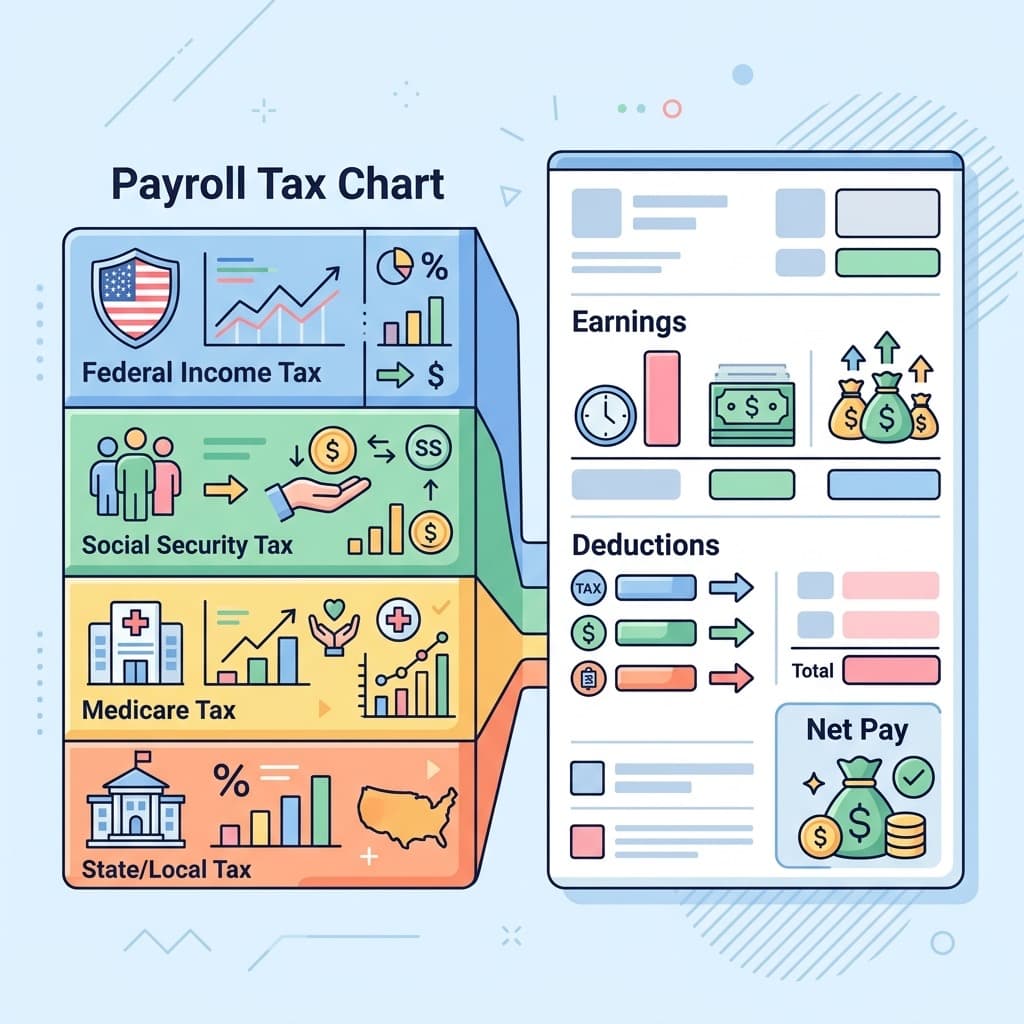
When you examine a new salary offer or look at your bi-weekly paycheck stub in Massachusetts, it can be surprising to see how many adjustments occur between your gross earnings and the final deposit. In the Commonwealth, your take-home pay is determined by standard federal income taxes, FICA withholdings (for Social Security and Medicare), a flat state income tax of 5.0%, and a statewide Paid Family and Medical Leave (PFML) payroll tax.
Let's trace a standard baseline. If you earn an annual gross salary of $98,000 as a single filer with no pre-tax contributions, Massachusetts levies a state income tax of $4,580.00 and a PFML contribution of $450.80. Once federal taxes and FICA are factored in, you will keep $72,742.20 in net annual take-home pay.
Assuming a typical bi-weekly schedule—which yields 26 pay periods over the calendar year—your recurring deposit will be approximately $2,797.78 every two weeks. You can use our tool above to estimate your personal paycheck details, or continue reading to learn how Massachusetts tax rules affect your wages.
Massachusetts Take-Home Pay Snapshot
Below is the distribution of a $98,000 baseline annual salary for a single Massachusetts taxpayer.
Running the math on a $98,000 salary
Visualizing where every dollar goes makes financial planning much easier. Below is the detailed bi-weekly paycheck breakdown of a single filer earning a gross annual wage of $98,000 with standard personal exemptions, FICA tax deductions, and no pre-tax savings.
| Type of Withholding | Annual Total | Bi-Weekly Paycheck |
|---|---|---|
| Gross Earnings | $98,000.00 | $3,769.23 |
| Federal Income Tax | -$12,730.00 | -$489.62 |
| FICA Tax (SS & Medicare) | -$7,497.00 | -$288.35 |
| Massachusetts State Income Tax | -$4,580.00 | -$176.15 |
| Massachusetts PFML Withholding | -$450.80 | -$17.34 |
| Net Take-Home Pay | $72,742.20 | $2,797.78 |
How standard deductions and personal exemptions lower your taxable income
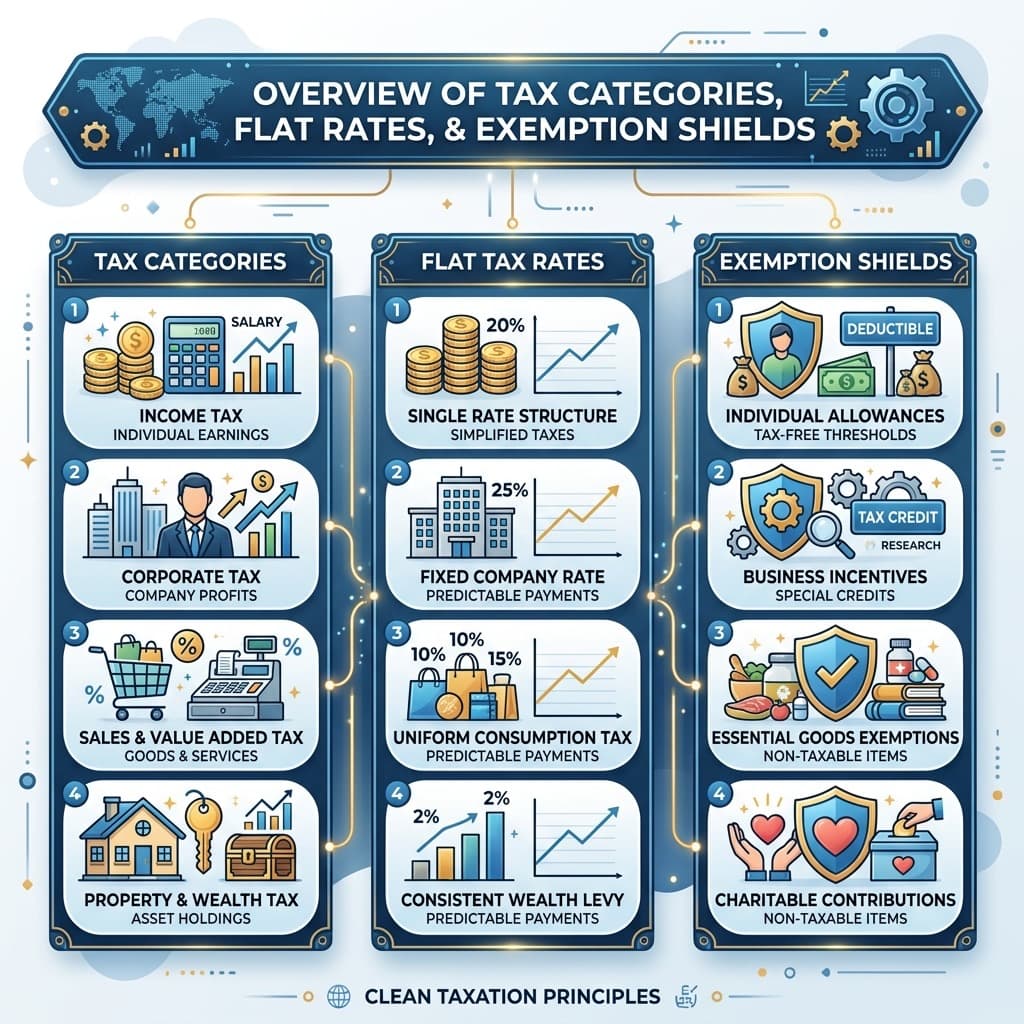
Massachusetts structures its tax breaks differently than the federal government and most other states. The Commonwealth does not feature a standard deduction. Instead, it relies on a system of **Personal Exemptions** to shield a portion of your wages from being taxed.
For the 2026 tax year, the basic personal exemptions are:
- Single / Married Filing Separately: $4,400
- Head of Household: $6,800
- Married Filing Jointly: $8,800
In our $98,000 single filer example, the personal exemption immediately shields the first $4,400 of wages from the state's flat 5.0% tax. Additionally, Massachusetts allows you to deduct the FICA taxes you pay during the year from your state taxable base, up to a maximum cap of **$2,000**. Because a single filer making $98,000 pays $7,497 in FICA, they get the full $2,000 deduction. This lowers their state taxable income from $98,000 to $91,600, yielding a final state tax bill of $4,580 instead of $4,900.
A bi-weekly paycheck walk-through for a $106,000 salary
Let's examine how workplace benefits and pre-tax retirement accounts affect your cash flow. Imagine you earn an annual gross salary of $106,000 as a single filer, paid on a bi-weekly schedule. You decide to contribute 6% of your gross wages to a pre-tax traditional 401(k) ($244.62 per period) and pay $100.00 per period for medical insurance premiums.
Applying these deductions yields the following bi-weekly paycheck calculations:
- Gross Period Pay: $4,076.92
- Social Security (6.2% of FICA base): $246.57
- Medicare (1.45% of FICA base): $57.67
- Massachusetts State Income Tax (flat 5.0%): $174.31 (based on annualized taxable income of $90,640.00)
- Federal Income Tax (FIT): $481.49
- Massachusetts PFML Withholding (0.46%): $17.17 (based on annualized eligible wages of $97,039.80)
- Total Deductions: $1,321.82 (this includes all taxes plus retirement and health contributions)
- Net Pay (Take-Home Check): $2,755.10
Understanding the M-4 form and setting up state withholdings
When you start working for a Massachusetts employer, you will need to establish your state tax withholding preferences. You will do this by completing Form M-4 (Massachusetts Employee's Withholding Allowance Certificate) and submitting it to your HR department.
Form M-4 is managed by the Massachusetts Department of Revenue. On this certificate, you declare your filing status and count the number of allowances you wish to claim. Each allowance increases the amount of income shielded from immediate paycheck withholding. Because Massachusetts utilizes a flat rate system, planning your allowances correctly is essential to avoid over-withholding, ensuring you keep more of your earnings in each pay period. Note that this is completely separate from the federal Form W-4.
How Massachusetts compares to other New England tax systems
Evaluating a move in the New England area reveals distinct tax approaches across state borders:
- New Hampshire: Features no state income tax on earned wages, making it a popular tax haven for workers in the region.
- Connecticut: Utilizes progressive tax brackets ranging from 2.0% up to 6.99%. You can compare options using our Connecticut Paycheck Calculator.
- Maine: Uses progressive brackets starting at 5.8% up to a top rate of 7.15%, which we detail in our Maine Paycheck Calculator.
At a flat 5.0% rate, Massachusetts offers a middle-ground tax burden. While higher earners are subject to the 4.0% millionaire surtax (the Fair Share Amendment) on taxable income exceeding $1,000,000, standard wage earners benefit from a predictable flat rate combined with the unique state FICA tax deduction.
Massachusetts Payroll Tax FAQs
Clear, expert answers to key questions about paycheck deductions, state tax rates, and standard deductions in Massachusetts.
Other State Paycheck Calculators
Connecticut Paycheck Calculator
Calculate take-home pay with Connecticut's progressive brackets (2.0% - 6.99%) and personal exemptions.
Maine Paycheck Calculator
Calculate take-home pay with Maine's progressive brackets (5.8% - 7.15%) and personal exemptions.
Delaware Paycheck Calculator
Calculate take-home pay with Delaware's progressive brackets (2.2% - 6.6%) and personal credits.
Florida Paycheck Calculator
Calculate payroll take-home pay in Florida, which has no state income tax deductions.